Ron Reigns:
Welcome and thank you for joining us on Birth Mother Matters in Adoption with Kelly Rourke-Scarry and me, Ron Reigns, where we delve into the issues of adoption from every angle of the adoption triad and offer support to women searching for baby adoption in Arizona.
Speaker 2:
Do what’s best for your kid and for yourself because if you can’t take care of yourself, you’re definitely not going to be able to take care of that kid, and that’s not fair.
Speaker 3:
And I know that my daughter will be well taken care of with them.
Speaker 5:
All I could think about was needing to save my son.
Kelly Rourke-Scarry:
My name is Kelly Rourke-Scarry. I’m the executive director, president, and co-founder of Building Arizona Family’s Adoption Agency and The Donna K. Evans Foundation. I am the creator of the You Before Me campaign. I have a bachelor’s degree in Family Studies and human development and a master’s degree in education with an emphasis in school counseling. I was adopted at the age of three days, born to a teen birth mother, raised in a closed adoption, and reunited with my birth mother in 2007. I have worked in the adoption field for over 15 years assisting birthmothers with baby adoption in Arizona.
Ron Reigns:
And I’m Ron Reigns. I’ve worked in radio since 1999. I was the co-host of two successful morning shows in Prescott, Arizona. Now, I work for my wife, an adoption attorney, and I can combine these two great passions and share them on this podcast.
Kelly Rourke-Scarry:
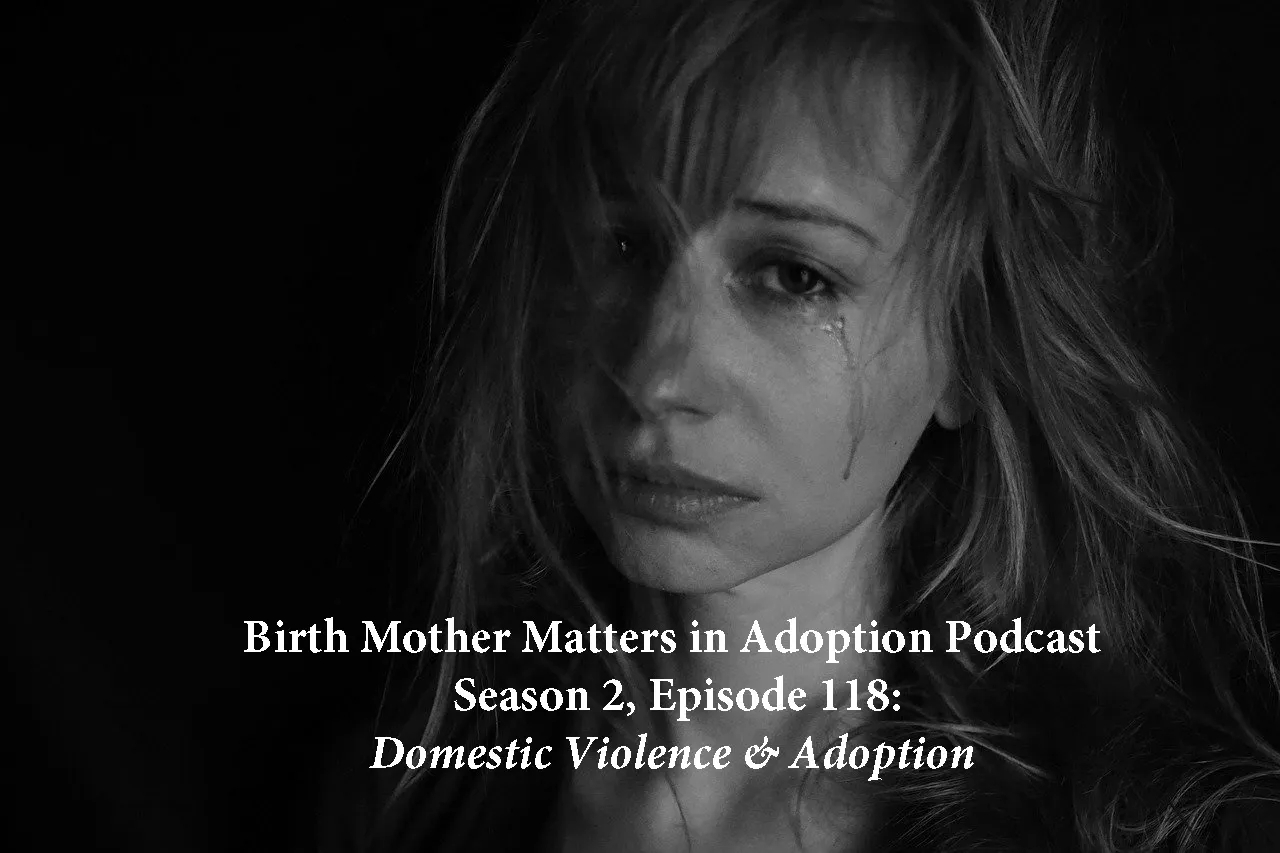
October is domestic violence awareness month. And so today, we’re going to talk about domestic violence and its impact on pregnancy and adoption. One thing we need to understand as a society is that domestic violence is not just physical violence alone. It is any behavior where the purpose is to gain power and control over a spouse, a partner, a girlfriend, a boyfriend, or a family member. Unfortunately, studies show us that abuse is a learned behavior, and it’s not caused by anger, mental problems, drugs, alcohol, or other common excuses, according to the Arizona Coalition to end sexual and domestic violence. So, the reason I wanted to talk about this is not only to raise awareness for domestic violence but also to look at the impact of domestic violence on pregnancy and adoption. What does it look like? The majority of domestic violence in adoptions is at the hands of birth mothers and birth fathers.
Kelly Rourke-Scarry:
And so we do have many of our birth mothers that are either in domestic violent relationships or they’ve been previous victims, or they’ve had some experience with it. It is not uncommon, unfortunately, too; over the last 16 years, I have been talking with a birth mother, and I’ve seen marks on her arm or her face. We always ask them if they’re safe and if they need help. So when women enter the program, we want to ensure they’re safe. If they come in for a visit, we want to ensure they feel safe where they’re living and have a safe place to go. They also sometimes are open to talking about what’s going on. If it’s with what’s happening other times, they’re very closed off, and they’ll make up excuses for bruises that don’t match the story that they’re telling.
Kelly Rourke-Scarry:
As social workers, we try to get them to open up and help, encourage them to seek help, give them resources, and help keep them safe. But unfortunately, the majority of them aren’t ready to leave their partner. If that’s, who’s the perpetrator of the domestic violence, they’re in a cycle, and it’s a vicious cycle. And it’s really hard. It’s hard to watch. I would say some of the most memorable ones I remember would be a birth mother who had a large bite mark on her arm. And I asked her what had happened. And she said her boyfriend bit her because she wouldn’t get him the last dollar in her purse.
Ron Reigns:
Wow.
Kelly Rourke-Scarry:
She didn’t want to press charges. She said she would be done with him and not let him return. But we’ve had other situations where a birth mom will come in with a black eye, and she fell, but the baby’s okay, but she fell, and it’s tough for these women because they’re caught in this cycle. And unfortunately, a lot of birth mothers have lived a life where they have witnessed it, maybe with their own parents. And so they somehow normalize it.
Ron Reigns:
Right.
Kelly Rourke-Scarry:
What’s interesting is in the state of Arizona in the Arizona state statutes it says if a person is convicted of an offense involving domestic violence and the victim was pregnant at the time of the commission of the offense at the time of sentencing, the court shall take into consideration the fact the victim was pregnant and may increase his sentence. It also goes on to say that what is included in domestic violence carries the classification prescribed in this section of this title, in which the offense is classified.
Kelly Rourke-Scarry:
If the defendant committed a felony offense listed in subsection A of this section against a pregnant victim and knew the victim was pregnant, or if the defendant committed a felony offense causing physical injury to a pregnant victim and knew the victim was pregnant, the maximum sentence, otherwise authorized for that violation shall be increased by up to two years. It’s a start; it’s going in the right direction.
Ron Reigns:
Yeah, it’s slow, but wow, it’s better than nothing.
Kelly Rourke-Scarry:
Yeah. It’s better than nothing. And I think taking a month and really trying to focus on awareness of domestic violence, what the signs are when you go into a hospital. If you’re having a baby, they’ll often pull you into another room, and they’ll make sure you’re safe and your partner’s safe and that you have a safe place to go.
Kelly Rourke-Scarry:
And they’re supposed to pretty much do with everybody because it crosses all socioeconomic barriers. People just hide it. I think the reason I feel this is important is because one of the reasons that a woman places a baby for adoption is because she wants the baby to get out of the situation she’s in. I have seen a woman choose a closed adoption for that reason; even though she wanted to maintain her child’s life, she wasn’t sure she would get out of the relationship she was in. And she wasn’t sure he would stay away. And so, to keep her child safe, she did what she felt was best. And it was hard, but I really respected her for it. And closed adoptions aren’t common anymore. They used to be, but they aren’t.
Kelly Rourke-Scarry:
And the more common ones were the reasons for situations such as that. Where they’re in a relationship, and there is domestic violence, and they don’t want their child to be a part of this anymore. From what I have seen, the women who can break out of the cycle do amazingly well. It’s tough at first, but every day they get better. So, for any of our listeners out there who are pregnant, are considering baby adoption in Arizona, or maybe just have a friend or family member in a domestic violent relationship, reach out to them. Tell them no judgment; give them the information so they can reach out and get help because you can call a 1(800) number. You can remain as anonymous as you want to, but if you remain anonymous and you don’t press charges, it’s not going to stop.
Ron Reigns:
Now, as far as trying to get them out of the cycle, obviously call the 800 number and talk to people.
Kelly Rourke-Scarry:
Get resources to help you get out.
Ron Reigns:
What are some of the techniques, or how do they try to help these women to break this cycle?
Kelly Rourke-Scarry:
A lot of times, what they do is they will provide a domestic violence shelter. And what that is is it’s a shelter with women who, and we’re primarily talking about women. Yes, men can be victims as well, but today, we’re just talking about women. Women can go to the shelter; the address is not disclosed anywhere. Nobody will have knowledge of the address she’s at. Usually, you can take other children with you, and they will help you with counseling, services, and a safe place to stay. And then they reintroduce you into life. And a lot of women during that time petitioned to get a divorce. They’re going through hearings regarding the abuse. And it’s really a way if you’re ready to make a move; it’s a great way to go because you have a roof over your head, and you have people supporting you trained in how to get away from him.
Kelly Rourke-Scarry:
It’s almost like withdrawing from him, if you will because it can be an addiction, and that’s why they stay. And it’s a pattern. Anytime you’re breaking a cycle, that’s really hard. So if they can take the opportunity and get to a domestic violence shelter, then from there, they will get all the help they need. And we have had women come to us from domestic violence shelters wanting to do an adoption. And again, I think those women are so brave. I think they’re so brave. And I think they’re making a beautiful choice, and it’s so hard when you see the women that just keep going back again and again and again, and you just hope they understand that people die from this. People die from this.
Ron Reigns:
Absolutely.
Kelly Rourke-Scarry:
Studies have shown us homicide is the number one cause of death for a pregnant woman.
Ron Reigns:
That is heartbreaking.
Kelly Rourke-Scarry:
That is heartbreaking. The National Coalition Against Domestic Violence and Pregnancy states that 50 to 75 women are abused before pregnancy or abused during pregnancy, and 77% of homicide victims are killed early during the first trimester. Pregnant homicide victims are more likely to be killed with a gun than non-pregnant homicide victims. Reading through statistics like this makes you catch your breath because it’s so hard to realize this is happening here in the United States. And it’s just really hard. The National Institute of Health estimates that abusers target more than 300,000 pregnant women in the U.S. each year, adding to that number, maybe even higher, given the reluctance of survivors to disclose abuse, especially during pregnancy.
Kelly Rourke-Scarry:
When I was raised, you’re always taught a man should never put his hands on a woman, and likewise, a woman should never put her hands on a man, but I think it takes it to a whole new level when there’s a pregnancy involved because there’s an innocent baby. It’s caught literally in the middle. And so I think, if you have any concerns about domestic violence, or you have witnessed it, or you’ve been a part of it, call and get help. That’s what this month is for. This month is to raise awareness so people around you can start looking for signs and understanding that you’re struggling and need help.
Ron Reigns:
Nicole Brown Simpson and OJ Simpson were two of the most famous examples of this. Do you think that brought a lot of light to this issue? And hopefully, brought a lot of women out of these situations?
Kelly Rourke-Scarry:
I think it was a good start.
Ron Reigns:
Okay.
Kelly Rourke-Scarry:
But I don’t think it did enough.
Ron Reigns:
Oh, no. If it’s still happening anywhere, it hasn’t been destroyed; we need to do that.
Kelly Rourke-Scarry:
And it didn’t help he was found not guilty.
Ron Reigns:
Absolutely.
Kelly Rourke-Scarry:
So again, October is National Domestic Violence Awareness Month.
Ron Reigns:
And that National Domestic Violence Hotline number we mentioned earlier is +1(800)-799-SAFE. That’s +1(800)-799-7233. You can also call +1(800)-787-3224. They offer help to anyone involved in a domestic violence situation. They help victims as well as survivors, friends, and family members. They also provide information on sexual assault, battering intervention, and prevention programs. Please make sure to call them if you need help. Those numbers, once again, are +1 800-799-SAFE and +1 800-787-3224.
Ron Reigns:
Thank you for joining us on Birth Mother Matters in Adoption. If you’re listening and you’re dealing with an unplanned pregnancy and want more information about adoption, Building Arizona Families is a local Arizona adoption agency available 24/7 by phone or text at (623)-695-4112. We can make an immediate appointment with you to get started on creating an Arizona adoption plan or just get you more information. You can also learn more about Building Arizona Families on their website azpregnancyhelp.com. Thanks, also go out to Grapes for allowing us to use their song, I Don’t Know, as our theme song. Birth Mother Matters in Adoption was written and produced by Kelly Rourke-Scarry and edited by me. Please rate and review this podcast wherever you’re listening to us. We’d really appreciate it. We also now have a website at birthmothermatterspodcast.com. Tune in next time on Birth Mother Matters in Adoption for Kelly Rourke-Scarry. I’m Ron Reigns.